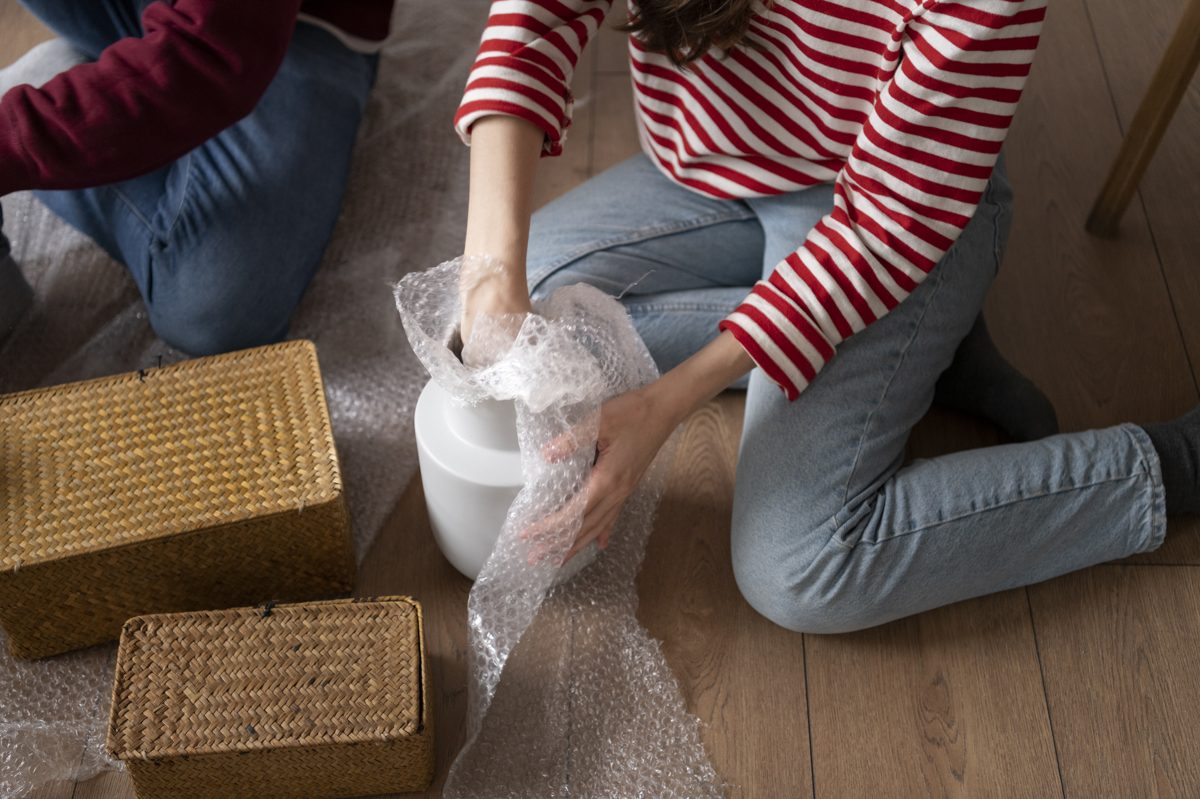
Breakage almost never happens because a box was dropped. It happens because the contents moved inside the box while the truck was moving. Fragile packing is about eliminating that space, using a carton rigid enough to hold its shape under load, and orienting each item the way it is strongest. We pack fragile rooms across New Hampshire most weeks of the year, and the same handful of mistakes account for the overwhelming majority of damage we see.
Movement Inside the Box Is What Breaks Things
A loaded truck travels for hours over road seams, potholes, and the kind of frost heave that New Hampshire produces every spring. Everything inside vibrates continuously. A plate with half an inch of free space around it taps against its neighbor several thousand times between Manchester and the Seacoast, and the chip that results has nothing to do with handling.
This is why packing paper is not padding in the decorative sense. It is a wedge. Crumpled paper at the bottom, between every item, and filling the top until the flaps need pressure to close is what converts a box of loose objects into a single solid mass. A properly packed carton makes no sound when you shake it gently. That silence is the test, and it takes about two seconds to apply. Since running short on paper is what produces underpacked boxes, work out your box counts by home size before you start buying supplies.
Dishes Stand on Edge, and Glasses Stand Upright
Plates stacked flat fail under their own weight the moment the load shifts. Standing them vertically on edge, like records in a crate, puts the force along the strongest axis of the plate instead of across the weakest. Each plate gets wrapped individually, then the stack goes in on edge with paper packed firmly down both sides so nothing can tip.
Glassware and stemware go upright, never on their sides. Crumple paper into the bowl of each glass first, then wrap the outside, paying attention to the stem, which is where almost all stemware damage occurs. Use a dish pack rather than a standard carton. Dish packs are double-walled, and the difference matters once four or five boxes are stacked on top. Heavier pieces go at the bottom, lighter at the top, and no fragile carton should be loaded so heavy that it becomes awkward to carry. A box that strains the person holding it is a box more likely to be set down hard.
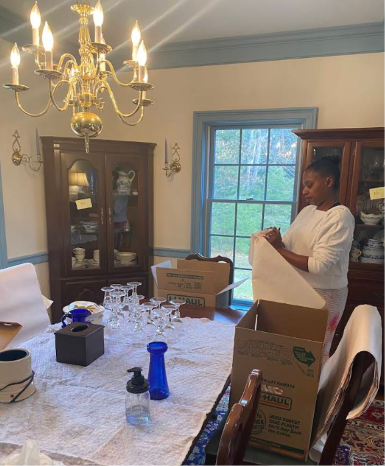
- Wrap each piece individually, never two together in one sheet
- Line the bottom of every fragile carton with two to three inches of crumpled paper
- Fill horizontal gaps before vertical ones, since sideways movement does the damage
- Top off until the flaps meet under light pressure, with no hollow left underneath
- Mark fragile on the top and on at least two sides, since the top is not visible when stacked
- Keep each fragile carton light enough to lift comfortably with one arm underneath
Art, Mirrors, and Anything Flat
Flat items fail at the corners and across the face, so both need separate attention. Corner protectors take the impact that would otherwise travel into the frame, and a rigid mirror carton or a custom crate stops flex across the middle. A blanket alone is not enough for anything framed under glass, because a blanket prevents scuffing and does nothing about flex.
Glazed artwork benefits from tape applied across the glass in an X before wrapping. If the glass breaks regardless, the tape holds the pieces together instead of letting them travel into the artwork itself. Original art, anything with real value and anything irreplaceable is worth custom crating rather than a carton. Crating is included in full and partial packing, so it can be booked for one room or for the whole house. Flat items then travel standing on edge in the truck, never laid flat and never with weight on top.
Would rather hand over the kitchen, the china cabinet and the art? Give us a call at (603) 288-9627, and we’ll price packing just those rooms so you only pay for the part you didn’t want to take on.
Electronics Need Their Own Approach
Electronics break differently. The risk is less about impact and more about static, moisture and connections that work loose over a few hours of vibration. Original boxes are the best option when they still exist, since they were engineered around the exact shape of the item. Where they do not, a snug carton with rigid padding on all six faces is the substitute.
Photograph the back of anything with more than two cables before unplugging it. That photo saves considerably more time than it costs. Remove discs, cartridges and anything that moves inside a drive. Televisions travel upright and never flat, because a screen laid horizontally flexes across its own weight. Loose cables go in labeled bags rather than loose in the box, where connectors scratch screens and finishes.
What Our Crews Do That You Can Copy
Every fragile item we handle gets wrapped before it leaves the room it is in, not at the truck. Wrapping at the source removes the carry between the room and the staging area, which is where unwrapped items meet door frames. Upholstered pieces get stretch wrapped, hard furniture gets blanket wrapped, and door jambs and banisters get padded before anything moves through them.
The other habit worth copying is loading order. Fragile cartons go on last and come off first, placed high in the truck and never under furniture or heavy boxes. Our crews tier a load so weight sits low and breakables ride above it. Protection and coverage work together rather than separately, and understanding valuation and moving coverage is worth doing before move day rather than after a claim.
Before You Start Wrapping
Buy more paper than you think you need. Running short mid kitchen is what produces the under padded boxes that break, and unused paper costs very little compared to a broken set of dishes. Dish packs, wardrobe boxes and crating materials are all part of what we bring when we pack a home.
Tell us which rooms worry you most. Call (603) 288-9627 or email info@eammoving.com to talk through a move in Manchester, NH, or anywhere else in the state, and we’ll price packing those rooms specifically. We’re open seven days a week, 7 AM to 9 PM, and you can contact us anytime. We’re happy to walk through whatever’s on your list.
Related Topics:
Ready to plan your move?
Get a free, no-obligation quote from a real person — usually within the same business day.
 Book Now